Bored? Not likely!

After I’d moved to Spain a lot of people used to ask me what on earth I did all day, and did I get bored? Well if you think about it you’ll realise that you have the same household chores to do in Spain as you ever did at home, cleaning floors, bathrooms, kitchen, washing, ironing etc. The major difference is that when you hang out the washing it dries in about an hour, and you can hang it up and head out for the day, knowing it isn’t going to be even wetter than when you left it. Oh, and I don’t usually iron between March and November except for linen items, it’s just too hot here. Take everything in off the line, fold a couple of times lengthwise, and roll up really tightly. No wrinkles and takes up less space in drawers and suitcases, plus you can find what you’re looking for more easily.

In summer it’s best to get up really early to do the regular chores, as it gets so hot during the day, and the longer you leave it the worse it gets. So usually we’re up around 7am to sweep and tidy up the terrace and pool area, then get the floors swept and mopped, the bathrooms and kitchen done, and the dinner prepped. This means the rest of the day is our own so we usually either go out to top up supplies and have lunch somewhere or we’re at home relaxing – such a hard life!

There are lots of things to do and toget involved in wherever you are in Spain, from walking groups to yoga classes, from craft and painting classes to quizzes, basically anything you can think of. If you are more comfortable with people who speak your language then there are loads of activities to get involved with. However, I would suggest that you dip into some things that might be a wee bit outside your comfort zone, and with a mix of nationalities – you will learn more about the world and about yourself that way.

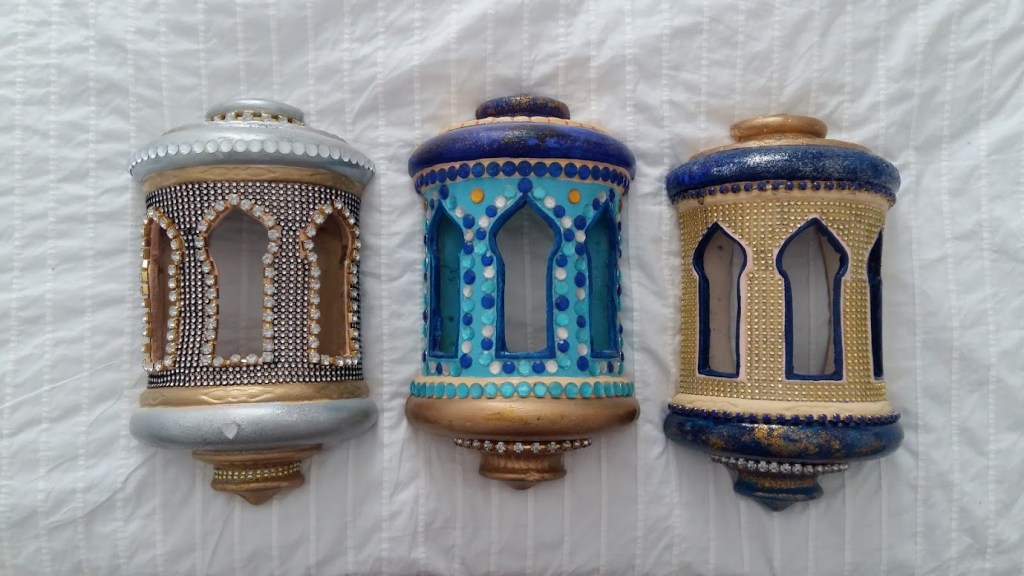
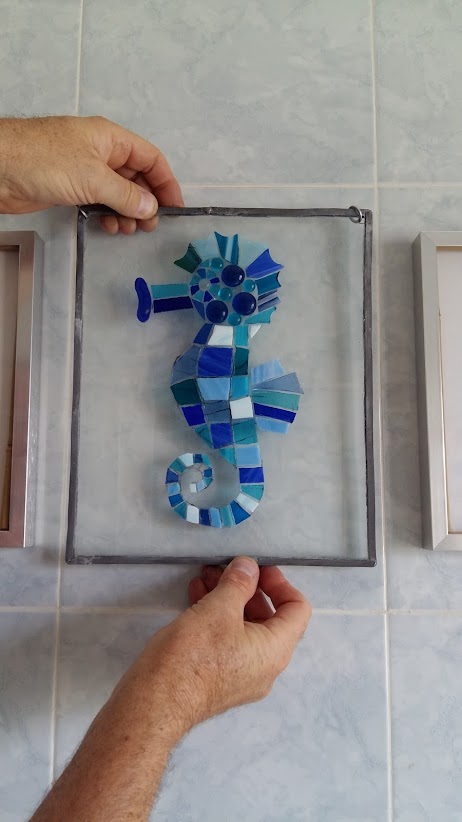
The husband is very keen on art, and has been to various classes where he’s produced glass and stone mosaics, and has ideas for decorating wall sconces. He buys plain, unvarnished sconces and then decorates them in a variety of ways. They’re great for presents as well as for our home.
While the husband is busy producing all sorts of mosaics and paintings I’m getting involved in my main hobby, which is writing. Some of you may remember I used to write a page every month for Local Women magazine, and I suppose this blog is about carrying that on here. I’ve also joined a writing group which is a fantastic support and encouragement to all its members…and we’ve even had books published! We’re a very cosmopolitan group – there are Irish, English, Dutch, French, German and Norwegian members, an amazing mix. What amazes me even more is that everyone writes in English. We share our writing with the group and get constructive feedback, as well as useful information about finding information on publishing. If you’re very unlucky I might throw up a couple of my offerings on here in the future!

Things take longer to do in Spain than at home, so even when you are out for regular shopping it can take much longer than you think! We have very few huge supermarkets here that sell everything along the lines of Sainsburys and Tescos, for example. Most of the major supermarkets just sell food and household goods. However, there are a couple, like Al Campo and Carrefour, which sell everything from food to garden supplies, household linens, school supplies, books, clothing – you name it, it’s there! Generally the shopping takes time because, well, because nobody is in any rush. The best idea is to combine it with a nice lunch, then head for the shops around 3pm when the Spanish are still at lunch or at home. I never mind doing the grocery shopping in the heat of the day at the height of summer as by around 3pm there’s hardly anyone around and I get finished up far sooner.

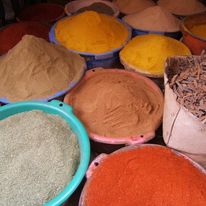
Most of the fruit and veg shopping is done in our local market which is held on Saturdays. Plenty of variety, good prices, and always the opportunity to catch up with friends for a cool refreshing drink as well. You can buy everything here, fruit, veg, clothing, leather goods, spices, great choice and something for everyone.
There is very little time to be bored in Spain. As someone once said “If you’re bored, you’re boring”. If we’re not doing the usual household chores we’re out and about shopping, having lunch, meeting up with friends, exploring new areas, apinting, writing, walking, cycling, swimming…the list is endless! If all else fails we are happy to just lie about in and round the pool and relax, especially on days when it’s really too hot to do anything else.

Speaking of markets, apart from the usual weekly markets we often have night markets, especially on the coast, where there are lots of tourists in the summer months. These run until at least 2am, so it’s a lot cooler to be out, and there’s something a bit magical about walking round market stalls in the early hours of the morning, in a gentle warmth. These markets are always busy. Given the number of them, and also how the Spanish don’t usually have dinner until 10pm or 11pm, I’m amazed that anyone is ever able to get up for work the next day!
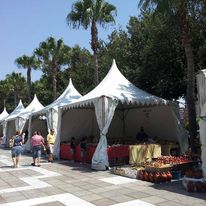
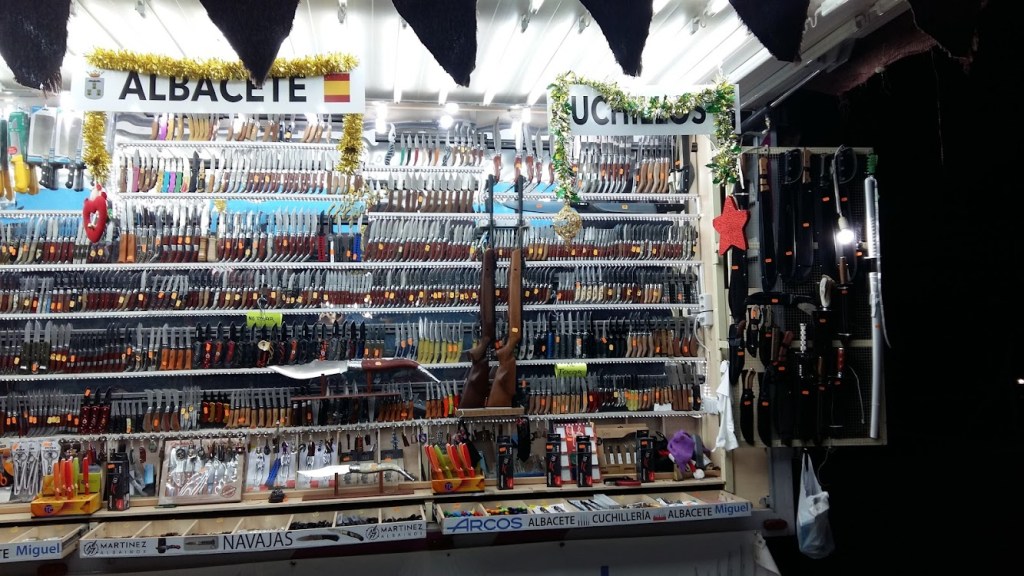
These late markets, as well as those at special fiesta times, sell an even wider variety of street food, clothing, artisan crafts, jewellery, household goods and everything else you can think of. One stall which really, REALLY surprised me was the one selling all kinds of knives, from little to huge, as well as guns. You live and learn!
Language please!

It seems a fairly obvious thing to say but if you’re going to move to a foreign country it makes sense to learn the language. When I was at school I learned Latin, French and German, and had the tiniest bit of Italian you could imagine. I never learned Spanish, and I really regret it now as I’d have been streets ahead on moving here.

Still there are plenty of opportunities to learn the lingo, from lessons provided by local town halls, to private group or one-to-one lessons.The best way, of course, is total immersion, but this often is neither possible nor practical, as it involves not speaking or listening to or having any access to your own language for a minimum of three months, though apparently the result is like switching on a light bulb, hey presto you’re practically fluent!

I’d say our language skills are reasonably competant, but I can certainly say more than I understand,though between us we manage in most situations.

When I first came house-hunting here one place I viewed was owned by an English couple who very proudly told me they had lived in Spain for 21 years and had only ever really needed to learn 7 words in Spanish – si, no, hola, adios, cerveza, cafe, gracias. I was amazed, but not in a good way. They had always lived in English-speaking “colonies” and shopped in “English” shops, so had genuinely never learned to speak Spanish.

Accents vary wildly too, as they do everywhere. We lived in one province for 11 years before moving to our current home in a different province 4 years ago. Trying to tune in to a different accent is so difficult – it’s a bit like someone from “sarf Lundun” trying to decipher Rab C. Nesbitt’s fabulous Scottish accent and vice versa!

Deciphering different accents and learning new words and expressions is difficult enough, but then you come up against the “false friends”, the words that sound like one thing but mean something else entirely. For example, if you go for an X-ray there’s a notice advising you to let the radiographer know if you are “embarazada”. This doesn’t mean “embarrased”, it means “pregnant”! Another “almost but not quite right” words is if you want to ask for a chicken in the butcher’s department. “Chicken” in Spanish is “pollo”. If you forget, and ask for a “polla”, especially a large one, you might find the shop staff laughing uncontrollably, as you will have just asked for a large, err, man’s VERY private part also beginning with “p”! Oh well, at least we are trying!

If you need to start somewhere then start with learning how to order food and drinks in restaurants, as this is likely to be where you might spend a good deal of time. Once you’ve mastered the basic words you’ll feel great, and don’t worry about the grammar or about getting things exactly right, it’s a perfect start to getting the hang of a new language.

My advice is to practise every day, even if it’s just the same few words every time, to make sure you get them right. The Spanish people really don’t care if your language is grammatically correct or not, but they DO care that you are making an effort to learn, and are always willing to help you find the right words.

I’ll never be fluent in Spanish, but I don’t need to be. I can get along with far more words thatn I ever thought I’d know, and if I get stuck there’s always google translate.

http://www.anirishlifeinspain.com

Plant life…

Gardening in Spain seems very different to gardening in more northerly, damper climes. I am the first to admit to being no gardener – I’d probably have been evicted from the Garden of Eden for neglecting it – but I’m starting to develop more of an interest now that we have a lot more space at this house.

One really important thing I have learned is that we really should have planted more fruit trees as soon as we moved here, to give them a great headway now that we’re finally ready to decide what to do with our garden. Much of it is terraced so we need to find someone to clear all the unwanted stuff and even out the terracing, with proper steps from one level to the next so that I don’t fall and break my neck getting round the place!

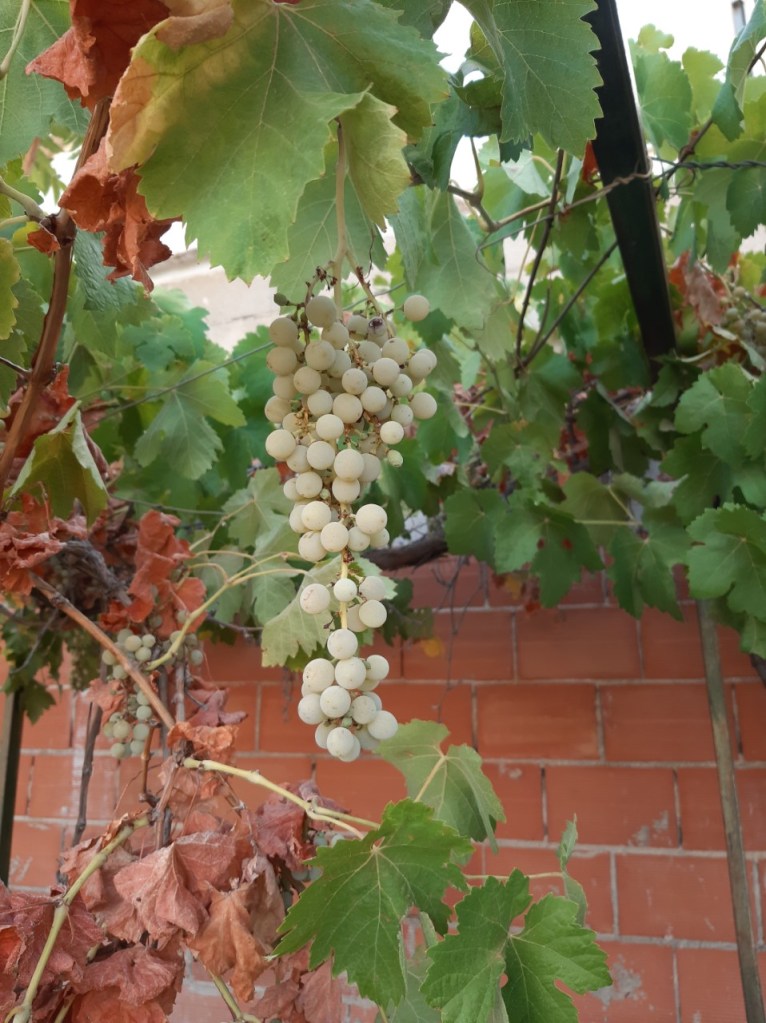
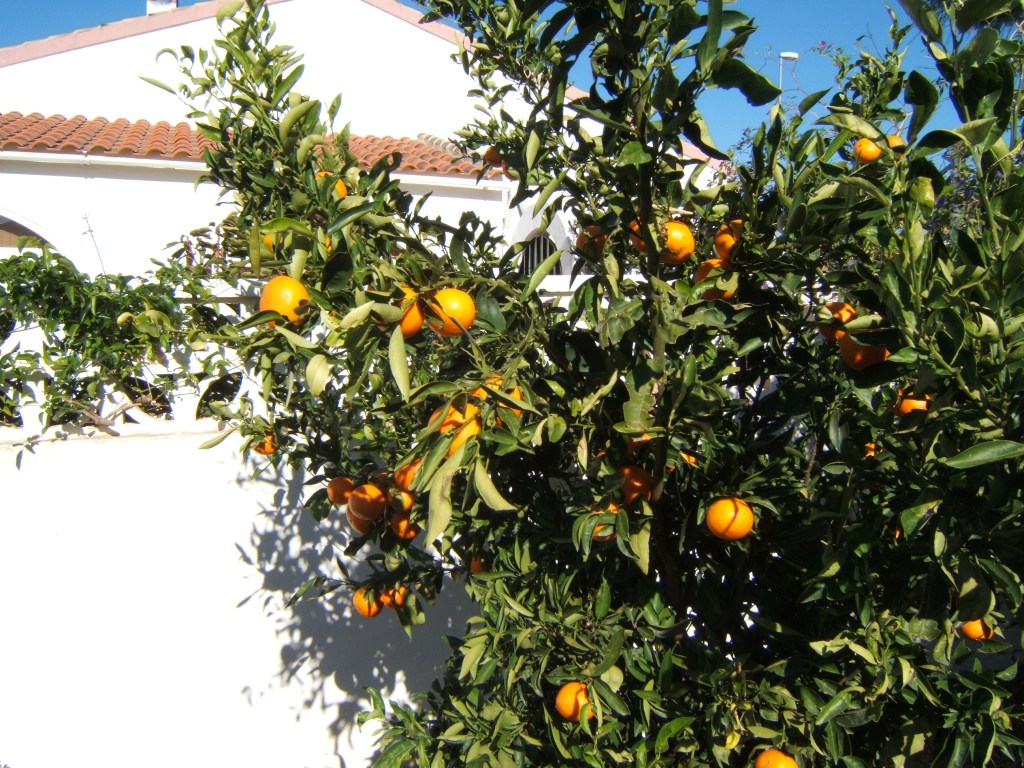
Having said that, we have inherited a great variety of trees and plants in the gardens, most of which seem to flourish in spite of my lack of knowledge. Our trees include pine, nispero, lilac, strawberry, (yes, an actual strawberry tree!), olive, almond, fig, pomegranate, lemon and blood orange. We also have two vines. I’m intending to plant a couple more orange and lemon trees as well as a couple more vines for seedless grapes. It’s still a novelty to just wander round the garden picking lemons and oranges, nothing like Norn Iron at all! Photo of last year’s baby grapes, followed by how big they grow.

I had this little clementine tree in my last house, it didn’t take long to start producing loads of oranges, so I’m hoping our current blood orange tree plus a couple more to go in will be the same!

It gets so very hot here in the summer months that we need to be careful about what to plant. I love hanging baskets but they’re no good in the summer here – they just wither and die in the heat.I’m going to get a few pots of geraniums to add a bit more colour round the terrace. I’ve also planted lots of nasturtium seeds in various locations, mostly round the base of the trees on the terrace, and in some pots as well, as they are absolutely gorgeous shades of red, yellow and orange, and the husband also likes to use the flowers in salads, quite a peppery flavour and very tasty.

I’ve been experimenting with growing climbers in tubs as we have five columns at the front of the house and I thought they looked a bit bare. We planted three bougainvilleas and two jasmines, and they make a big difference to the front of the house. And yes, that tile needs repairing!

A big trip to the local garden centre is coming up, to get a load more compost, and a whole host of geraniums,, lobelias and whatever else I can see. So with all of that, plus the myriad of nasturtium seeds and border wild flower seeds I’m planting, it’s a safe bet that the house will definitely look a lot more colourful before too long!

wwwanirishlifeinspain.com